

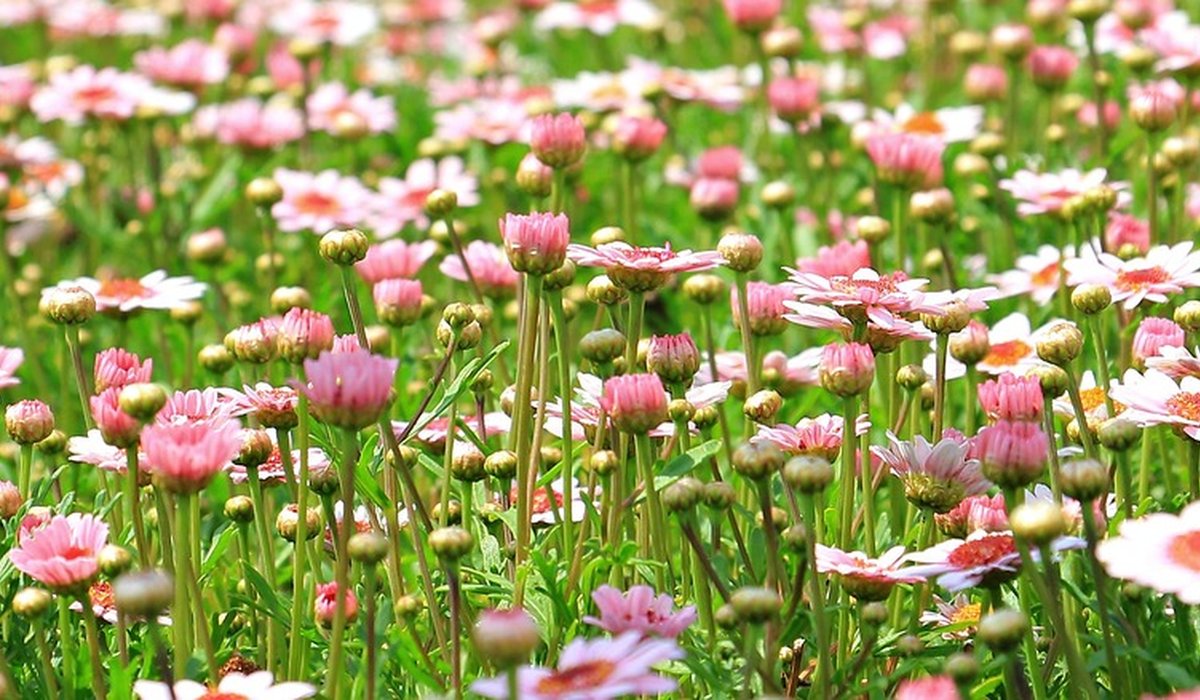
Most of us choose plants with our eyes. We pick for colour, for shape, for how a border looks from the kitchen window on a grey Tuesday in March. But the garden you actually sit in — the one you use after work, on a warm July evening with a glass of something cold — is experienced mostly through the nose. As the light fades, scent becomes the dominant sense, and plants that seemed unremarkable at midday suddenly take centre stage.
The good news for small gardens is that perfume needs very little space. A narrow strip of border beside a patio, a couple of pots flanking a bench, or a single climber on a south-facing wall can scent an entire courtyard. The trick is choosing the right plants and putting them within a metre or two of where you sit, because even the strongest fragrance is lost if the evening breeze carries it over the fence instead of across your lap.
Some plants release their scent specifically in the evening, timed to attract moths. These are the ones worth building a border around.
Think about airflow before you think about layout. Scent travels on moving air, so a plant tucked into a dead corner behind a shed will perfume nothing. Place your fragrant border on the side the prevailing breeze comes from — usually south-west in most of the UK — so the perfume is carried towards your seating rather than away from it.
Warmth intensifies fragrance, and hard surfaces store heat. A border against a brick wall, beside a paved patio or along a gravel path will smell noticeably stronger in the evening than the same plants in open lawn, because the masonry and stone radiate warmth for an hour or two after sunset. In a small courtyard this effect is exaggerated, which works entirely in your favour.
Keep the planting close. One metre from a garden bench is ideal; three metres and you will only catch it intermittently. If space is tight, put lavender in a pot at the edge of the patio and let it brush against your legs as you pass.
Lavender is the fussiest of the group and the one most often lost over winter. It demands sharp drainage and full sun. On heavy clay, dig in two bucketfuls of horticultural grit per square metre and plant on a slight mound so water runs away from the crown. Afterwards, mulch with 2cm of grit rather than compost — this keeps the collar dry and reflects a little light back up into the foliage.
Jasmine and honeysuckle are less particular but dislike drying out. Improve the soil with well-rotted garden compost or a soil-based potting compost if planting into a container.
For pots, use a loam-based compost such as John Innes No 2, which holds moisture and nutrients far better than peat-free multipurpose alone. Choose a pot at least 30cm across for lavender and 45cm for a jasmine, and always use crocks or a generous layer of grit at the base. Terracotta dries out faster than glazed or plastic, which suits lavender and inconveniences everything else.
Plant lavender and jasmine in spring or early autumn, when the soil is warm and moist but not waterlogged. Water thoroughly for the first season — a slow soak twice a week beats a daily sprinkle every time.
Night-scented stock does the heavy lifting for very little money. Scatter seed thinly in a prepared patch or a wide pot, cover with 5mm of compost, and water gently. Thin seedlings to about 15cm apart. If you grow nothing else, grow this.
A few jobs keep things going:
For a strip roughly 2m long and 60cm deep against a sunny wall, try this. Fix three horizontal wires to the wall and plant one common jasmine at the eastern end. In the middle of the border, plant three lavender 'Hidcote' about 40cm apart. Along the front edge, sow night-scented stock direct in April, repeating the sowing in late June. Finish with a single tobacco plant in a 30cm pot beside the bench.
The result is a border that rewards you twice: once in daylight, when the lavender hums with bees, and again at dusk, when the stock and jasmine take over. Sit still for ten minutes after the sun goes down and you will understand why it is worth the effort.

The Cleveryard Simple, genuine and looked after with care — the kind of place worth returning to.

The Cleveryard No rushing, no fuss — just thoughtful notes and practical help, written by people who care.

Use water butts, mulch beds and water early or late to reduce evaporation. Established shrubs often need less than we think.

Comments
ALina Kelian
19th May 2018 ReplyThe Cleveryard No rushing, no fuss — just thoughtful notes and practical help, written by people who care. ullamco laboris nisi ut aliquip ex ea commodo consequat.
Rlex Kelian
19th May 2018 ReplyThe Cleveryard We spend our time finding what works so you don't have to, and sharing exactly what made the difference. ullamco laboris nisi ut aliquip commodo.
Roboto Alex
21th May 2018 ReplyThe Cleveryard An honest, everyday look at the things that make life a little better — with advice you can actually use. ullamco laboris nisi ut aliquip ex ea commodo consequat.